Every year on the Wednesday before Thanksgiving, small town bars across many hometowns fill with people who lovingly signed each other’s yearbooks with promises to be friends forever. It used to be a night I looked forward to because it meant getting together with old high school friends. For years, I drank on Thanksgiving eve to be accepted. Now I have friends who don’t need me to.
Usually by 10 PM, we were all having the best night of our lives, swept away by the nostalgia, longing for the carefree ignorance of youth when politics didn’t impact our friendships and our drunken escapades weren’t indicators of a problem.
While there’s a part of me that would give anything to be taking the train into Boston with Jen and others so that we could meet up with other graduates from the class of 1991, I no longer have the patience to ignore grown adults who use words like “retard” because, “that’s how people talked when we were growing up.”
This year is the 35th anniversary of my high school graduation, and the world has indeed changed. The girl I was three and a half decades ago is a distant (if not cringe-worthy) memory. I don’t wish to call her to the fore of my consciousness and attempt to relive her experiences. And I crave not any sort of affirmation from the people who sat beside her in homeroom.
I would have made plans with Jen—whom I considered one of my closest friends—because she was the one who knew where everyone else was going. If I’m being honest, I don’t even know if my being included mattered that much to her. Even years after we left the halls of our high school, Jen never graduated from “the clique”—an impenetrable group of six friends. They came first. I was an add-on at times like Thanksgiving eve though the rest of the year we spoke regularly and got together weekly for runs and monthly for dinners. We traveled together, and I loved her dearly.
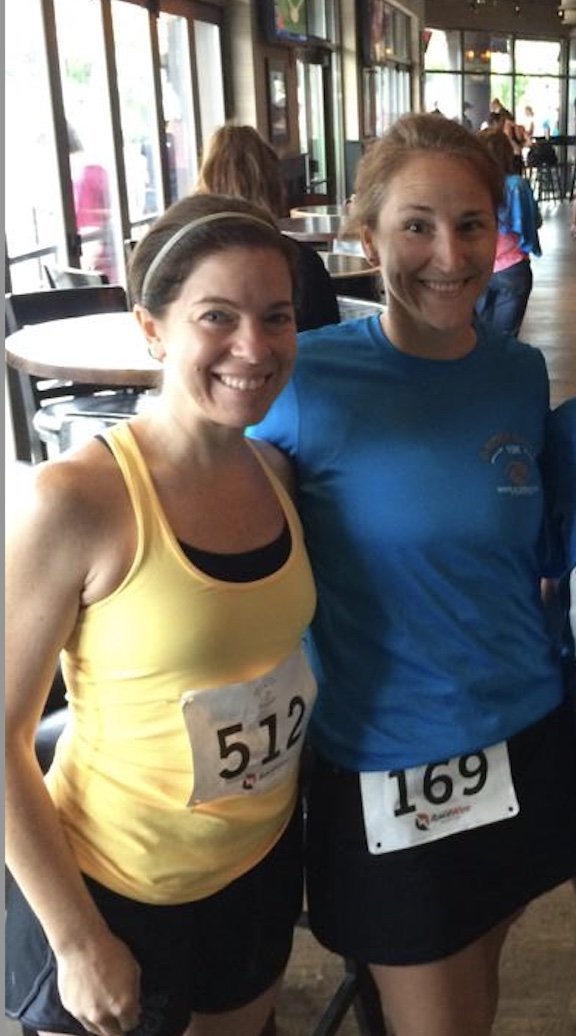
Jen died of colon cancer in 2019, and my connection to those former classmates died with her. Nobody called the next November, or the one after that. Every year since, the Wednesday before Thanksgiving has come and gone without my phone lighting up. I read that silence the way a 17-year-old would: as proof that I was only ever there because Jen brought me. As evidence that I never really mattered to any of them.
That's what grief does. You lose the person, and then you lose the version of yourself that only existed next to her.
The girl in those yearbook photos was desperate to be accepted. She would have had the second and third drink, likely even more to ensure that no one thought she was a bore. She would have laughed at the joke she didn't find funny and nodded along to the opinion she didn't hold.
I am not her anymore. More than six years ago, I left the drinking behind. The year after Jen died, I did what was expected of me: I showed up at the reunion, and made sure I was in the group photo—proof I was there. But her absence was profound, and when I left, I knew that I was leaving all of my high school memories behind. There was nothing left to show up for.
But here's what the girl in the yearbook photos wouldn't believe: my phone does buzz with invitations from friends who truly enjoy my company, despite (or perhaps because of) my sobriety. The friends I have now make plans with me, not around me, and none of those plans need me drinking to be fun. I'm not anyone's add-on. Tonight, I'm going out with them. I'll laugh at the jokes I actually find funny, and tomorrow I'll remember every one of them.
If tonight is your reunion, go. Hug the people who knew you at 17. Text the friend who always made the plans, while you still can.
Tomorrow we're all supposed to say what we're grateful for. Every year since she was first diagnosed in 2017, I have given thanks for my friendship with Jen, for her rules, which were black and white and not up for debate. For the righteous indignation she reserved for the woman who took her spot in body pump class. For her small town devotion and huge, loving heart. She always had her group and knew where she belonged, but she chose to be my friend anyway.