

My fears about the power of AI are not just the ramblings of an anxious mom
I produce a lot of cybersecurity content for what is arguably the largest cybersecurity conference in the world, so I know that AI is so much more than two letters. I understand enough about the differences between machine learning, artificial intelligence, generative AI, agentic AI, and artificial general intelligence (AGI) to conceptually know what I’m talking about even though I don’t really understand how the technology actually works.
That’s all to say that my opinions are informed by the wisdom of others—trailblazers in the field of AI whose work explores everything from building large language models to implementing the technology into existing networks and ensuring data integrity. I talk with lots of experts every day.
But yesterday I listened—quite intentionally—to a podcast I’ve never heard before called, The Diary of a CEO hosted by Steven Bartlett whose guest Tristan Harris warned about, “the catastrophic consequences AI will have on all of us.”
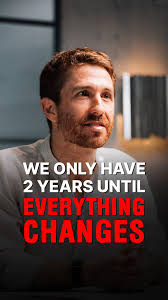
I don’t think that’s hyperbole.
Is the Future Inevitable?
Harris talked for over two hours about the AI arms race, pontificating about why “we” (and by we, he really means a small handful of very influential decision makers) are not willing to pause on the development of AI technologies despite an awareness of its potential destruction.
“It all starts by the belief that this is inevitable,” Harris said. “Is this inevitable? If everybody who’s building it believes it’s inevitable and the investors who are funding it believe it’s inevitable, it cocreates the inevitability.”
I suppose that yes, Harris’s points do elevate some levels of anxiety in me, but that doesn’t make his argument less true. One point discussed later in the episode is about human interaction vs. humans interacting with an AI. In summary, he argues that AI is different because it affirms the beliefs of the user, even sometimes aggrandizing them in ways that face-to-face communication with a human being doesn’t. Instead of a raised eyebrow, a look of surprise, or even a snarky comeback that one might experience when chatting IRL, ChatGPT, Gemini, Claude and other GenAIs will start with a warm affirmation.
Is everything I ask it really a great question? It sure does make me feel like I’m aspiring towards brilliance in my pursuit to actually think a little bit less.
Why is this important? Because when the users feel validated, they’re inclined to engage—to accept the offer of the tool to do more. And in doing more, the tool is learning. They are not invested in the humans with whom they are engaging. The technology is practicing self-preservation. The more it learns, the smarter it becomes. The smarter it becomes, the more humans rely on it. The more humans rely on it, the more they are willing to pay for it.
However, the technology we use and pay for with both our money and our attention increasingly appeals to the user’s existing confirmation bias, Harris warns. What then happens to critical thinking?
A Reason for Hope
What I appreciate most about this podcast is that it wasn’t a doomsday diatribe about everything that’s wrong with AI, offering absolutely no hope. There was some Shakespearean tragedy-esque suggestion, that we are, like Macbeth, “ in blood stepped in so far that, should I wade no more, returning were as tedious as go o’er.”
Still, Bartlett asked what can be done—not for lawyers, legislators, academics, or technologists—but for the people at home who are listening. For me. What can assuage my anxiety?
“This can go in a different direction if people are clear about the problem that we’re trying to solve.”
I often tell my kids the same truth that Bartlett and Harris acknowledged in this riveting conversation. It is possible for two conflicting truths to exist at the same time. I am anxious about the future of the world, afraid of the potential consequence of a full-speed-ahead march toward an unregulated AI future. At the same time, I believe in the power of community. I believe that we can change the course of the future by doing what Harris advises—applying pressure now to ensure that our silent consent does not enable the building of a completely dystopian society.